Introduction
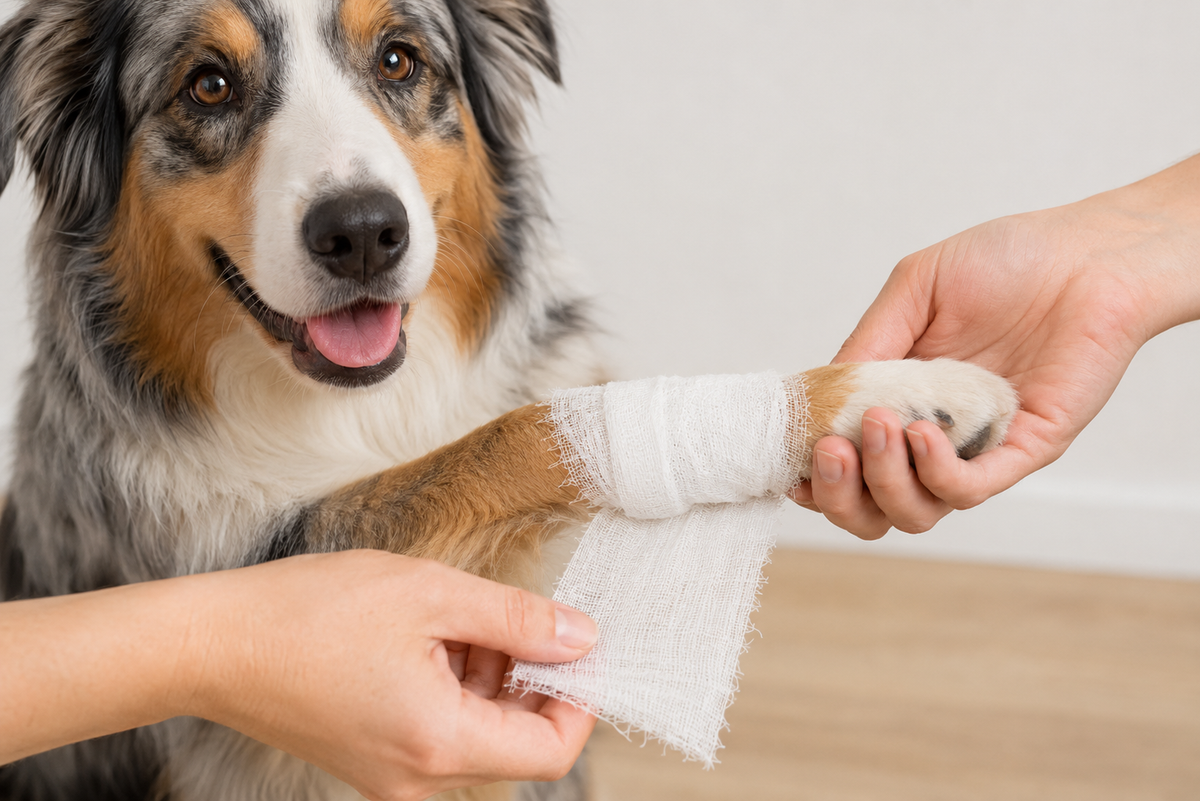
Cuts, scrapes, scratches, and other minor skin injuries are a frequent cause of concern for dog and cat owners. Upon discovering a wound, many immediately reach for whatever is in their home medicine cabinet: alcohol, iodine, brilliant green, or hydrogen peroxide. However, some of these popular treatment methods can actually slow down healing and cause additional discomfort to your pet.
Happy Llama — is an online veterinary pharmacy and a project for pet owners who care about understanding the basics of first aid and proper pet care. We share educational information about animal health and safe principles of home care.
Important to remember: The materials in this article are for informational and educational purposes only and do not replace a consultation with a veterinarian.
What Is Proper Wound Care for Dogs and Cats?
Proper wound care means removing contamination and reducing the risk of infection without causing additional damage to the tissues. The owner's main task is to gently clean the injured area and evaluate whether the animal requires veterinary assistance.
How It Looks in Daily Life
After a walk, an owner notices a cut paw, a scratch on the skin, or a small scrape and wants to safely treat it at home. Sometimes a wound that looks minor on the surface turns out to be deep or heavily contaminated.
The reverse also happens: owners begin using aggressive agents that only hinder the normal healing process of the tissues.
Why It Is Important to Focus on Proper Treatment
Even minor skin damage can become complicated by infection or inflammation.
Inappropriate actions when providing first aid can significantly prolong the recovery process.
Why this is dangerous:
- • Additional contamination of the wound;
- • Development of infection;
- • Slowing down of the healing process;
- • Chronic tissue inflammation.
When "It Won't Just Heal on Its Own"
If a wound is deep, dirty, or constantly licked by the animal, home observation may not be enough. The worsening of a wound's condition often happens gradually, which is why it is crucial to evaluate it daily.
Additionally, foreign objects can sometimes get trapped inside wounds, in which case healing might not occur at all.
Main signs that a wound requires professional attention:
- • Breach of skin integrity;
- • Bleeding;
- • Tissue swelling;
- • Redness around the injury;
- • Soreness or pain;
- • Discharge from the wound;
- • Unpleasant odor.
How to Properly Treat a Wound at Home
What you can do
- • If there is bleeding — gently press the area with a clean gauze pad;
- • Carefully remove visible debris and dirt;
- • Flush the wound with plenty of saline solution or clean water;
- • If necessary, carefully trim the hair around the injury without traumatizing the skin;
- • Do not allow the animal to constantly lick the wound.
What might be useful in your pet's first aid kit
- • Sterile gauze pads;
- • Saline solution (physiological saline);
- • Disposable gloves;
- • Blunt-end scissors;
- • A protective collar (e-collar), if necessary.
What you should NOT do on your own
Common mistakes made by owners:
- • Pouring alcohol into the wound;
- • Using concentrated iodine directly inside the wound;
- • Using brilliant green inside the wound;
- • Pouring hydrogen peroxide over the wound;
- • Dusting the wound with powders of unknown purpose;
- • Applying bandages that are too tight;
- • Attempting to stitch the injury yourself.
❗ Some antiseptics are suitable for treating the skin around a wound, but not for the wound surface itself! Aggressive substances cause tissue burns and interfere with healing.
When to Urgently Contact a Veterinarian
In these cases, a mandatory consultation with a veterinary doctor and proper diagnosis are required:
- • The wound is deep or its edges are gaping wide;
- • Bleeding cannot be stopped on your own;
- • Muscles, tendons, or other deep tissues are visible;
- • The injury was sustained from another animal's bite;
- • The wound is heavily contaminated with soil or foreign objects;
- • Pus-like discharge or an unpleasant odor has appeared;
- • The animal shows severe pain, lethargy, or a fever.
It is also highly advisable to show a doctor any wound in the area of the eyes, muzzle, joints, or genitals.
Briefly About the Main Points
Minor wounds on dogs and cats can often be safely flushed and evaluated at home. The main goal of treatment is to clean the injury without causing extra trauma to the tissues. If you have any doubts about the depth of the wound or your pet's general condition, it is better not to take risks and contact a vet.
Happy Llama materials are purely educational and informational in nature and do not constitute medical recommendations or a substitute for a vet's consultation. We remind you that if you notice alarming symptoms in your pet, it is best to contact a veterinary clinic as soon as possible for a quality diagnosis.